arandasOS
Operations system for Grupo Arandas, a taquería chain with a central warehouse in Monterrey. We put the pre-dawn buying at the wholesale market, each restaurant’s end-of-shift cash count, supplier payments and the board report into one app.
- Client
- Taquerías and restaurants with a central warehouse · Monterrey, Mexico
- Type
- System
- Year
- 2026
17
Modules
12
Roles with permissions
~1,300
Automated tests
Offline
Entry at the market
01
An operation that lived in spreadsheets and photos
The weekly buying at the wholesale market and each restaurant’s cash count lived in spreadsheets and in photos sent over WhatsApp. To know how the day went, management had to ask.
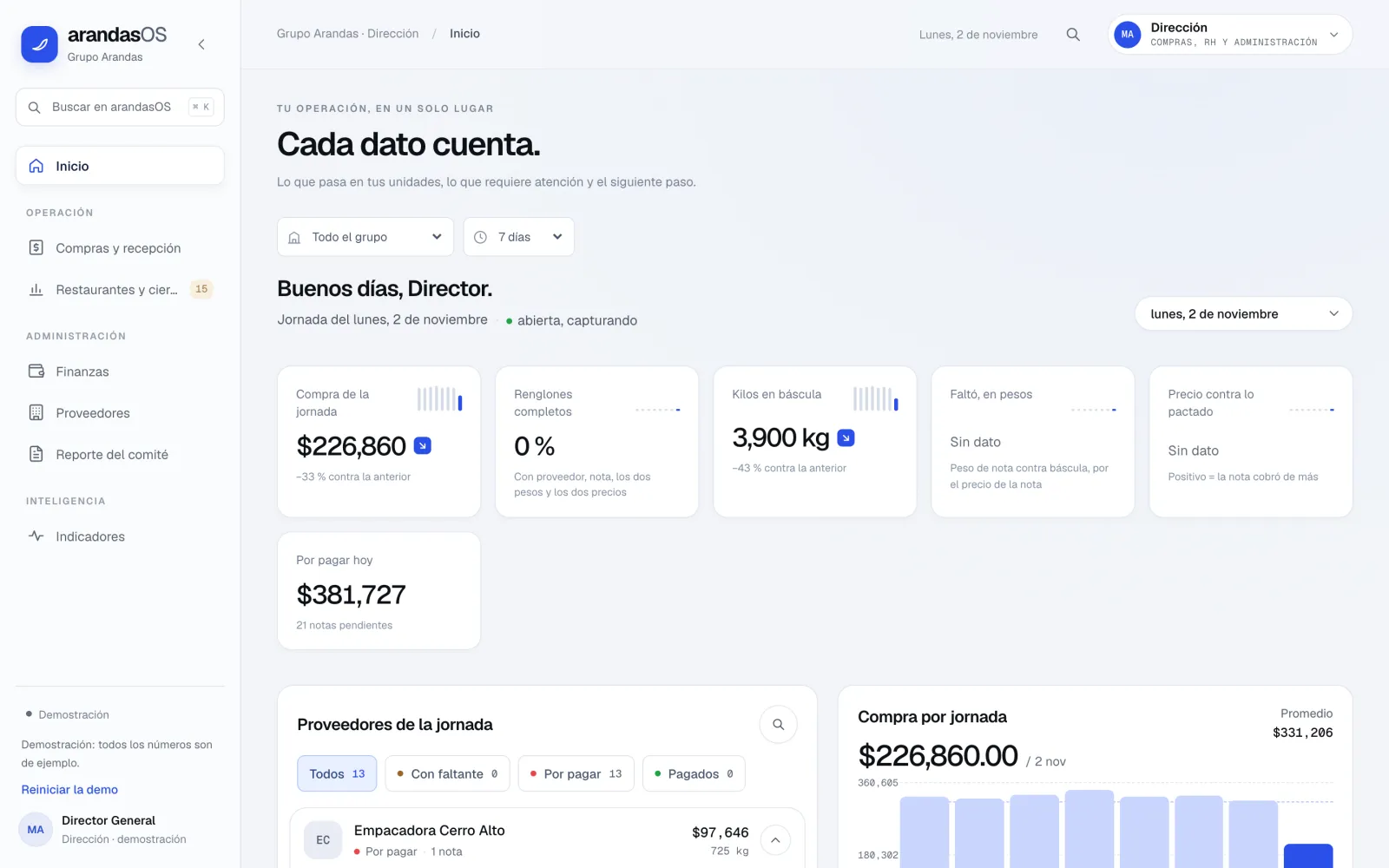
We set a concrete goal: management opens the app and knows how the day went in ten seconds. Everything else was designed around that sentence.
02
The loading dock: entering data before dawn, even with no signal
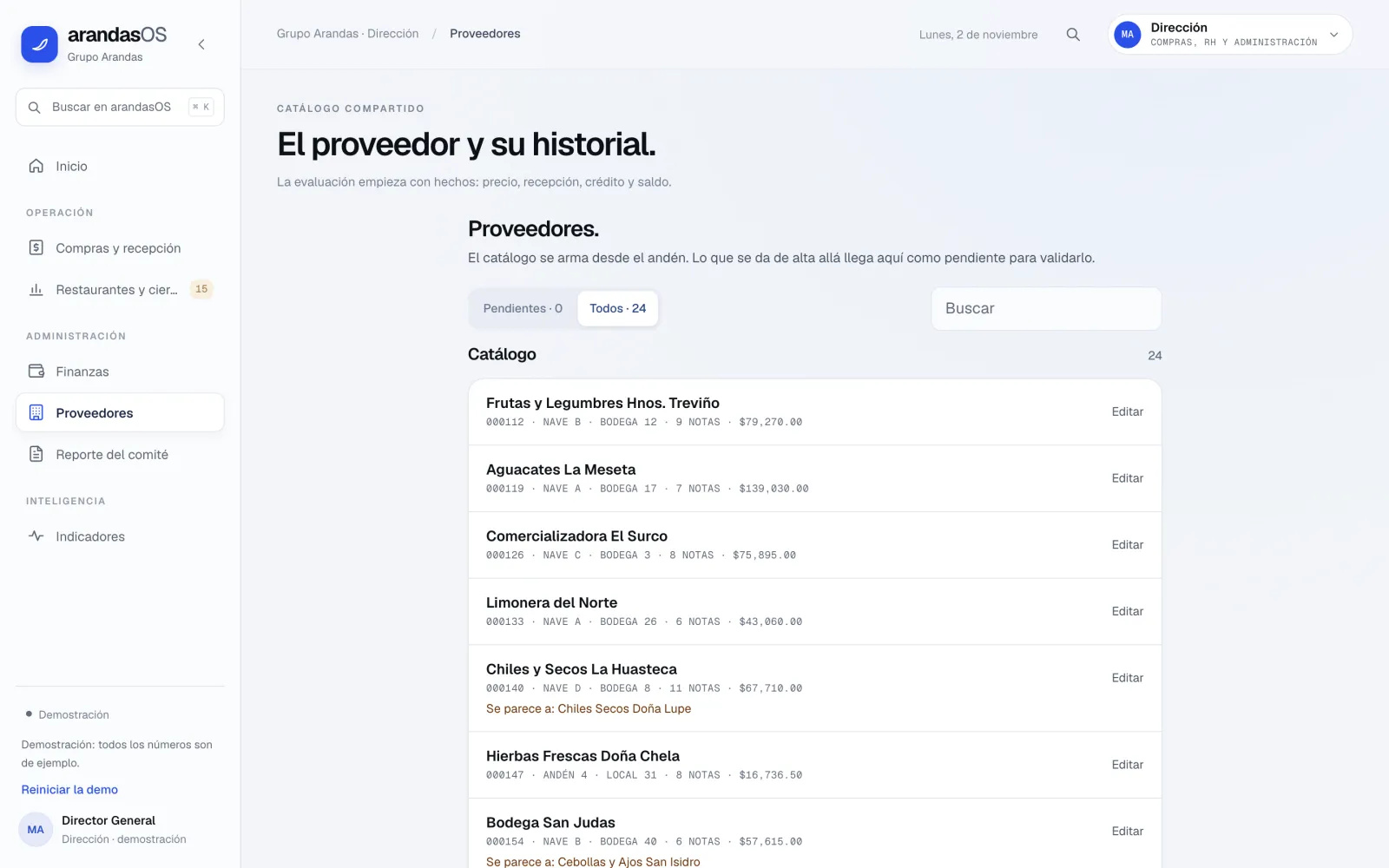
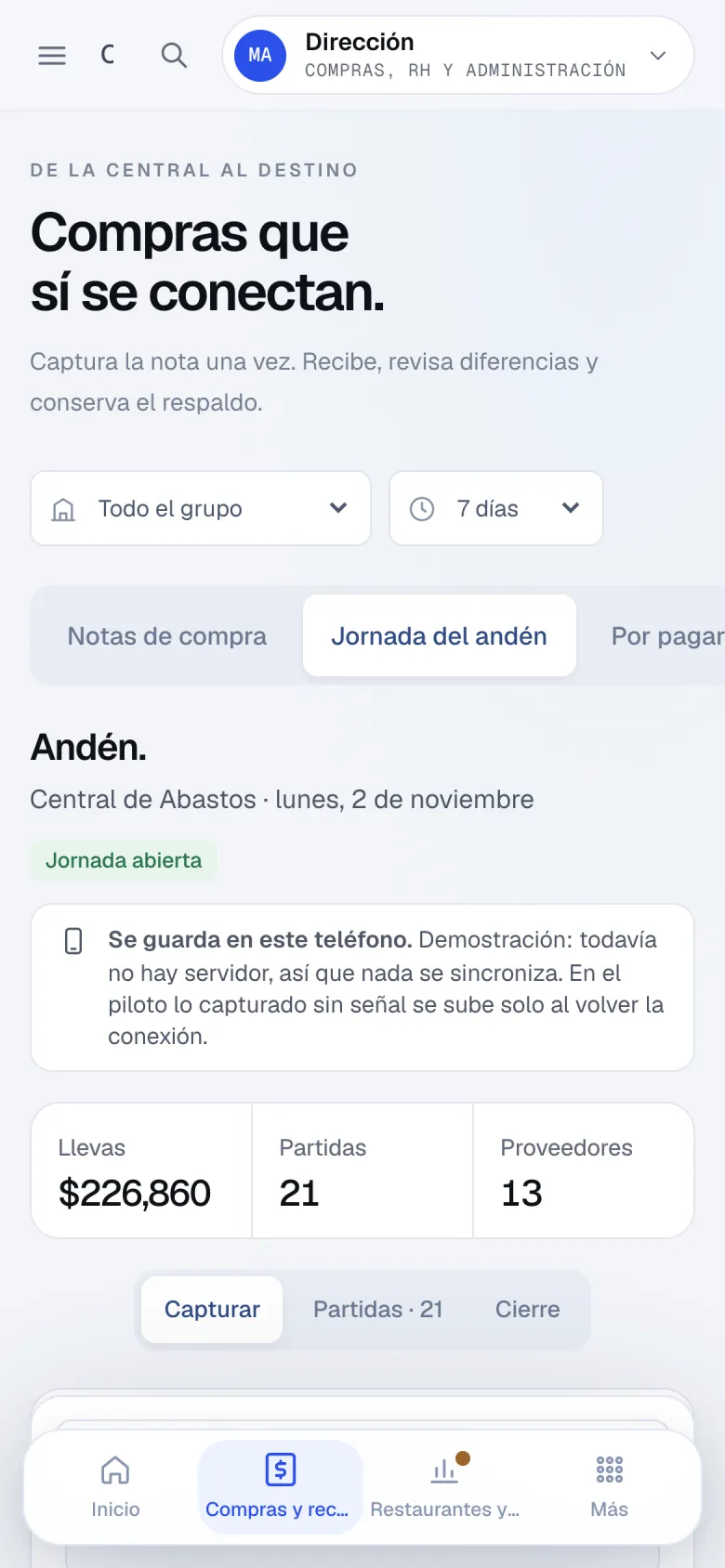
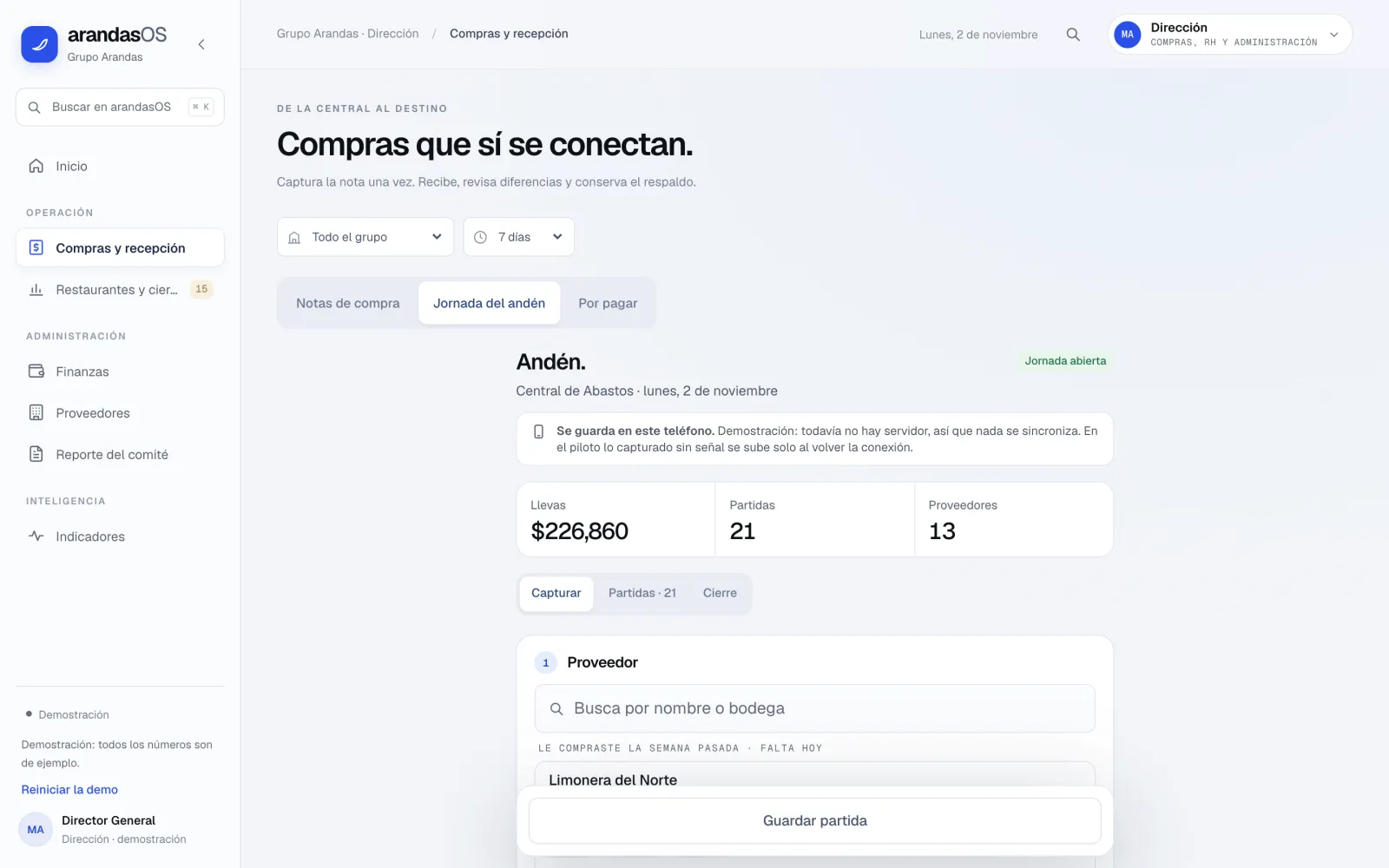
Buying happens at the market, before dawn, with poor coverage. So the dock module works offline: it saves on the phone and syncs when the connection comes back.
Each line is entered with its supplier, its receipt and its weight. The system checks the receipt against the scale, and the price against the agreed price.
- Receipt weight vs. scale and price vs. agreed price, line by line
- Flags shortages and price deviations
- Warns about duplicate receipts
- Photo of the receipt and quick supplier sign-up from the phone
03
Cash counts that check themselves
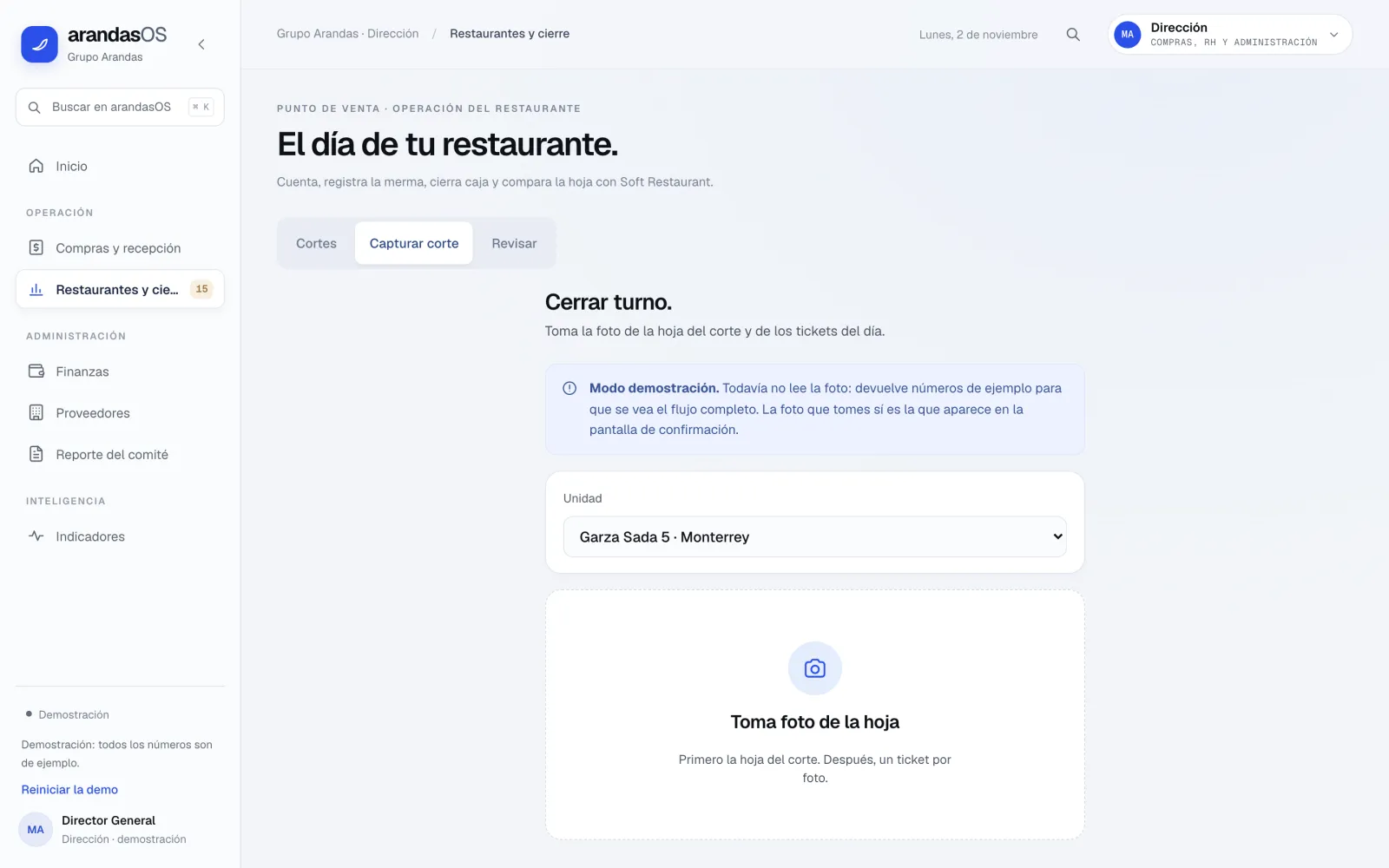
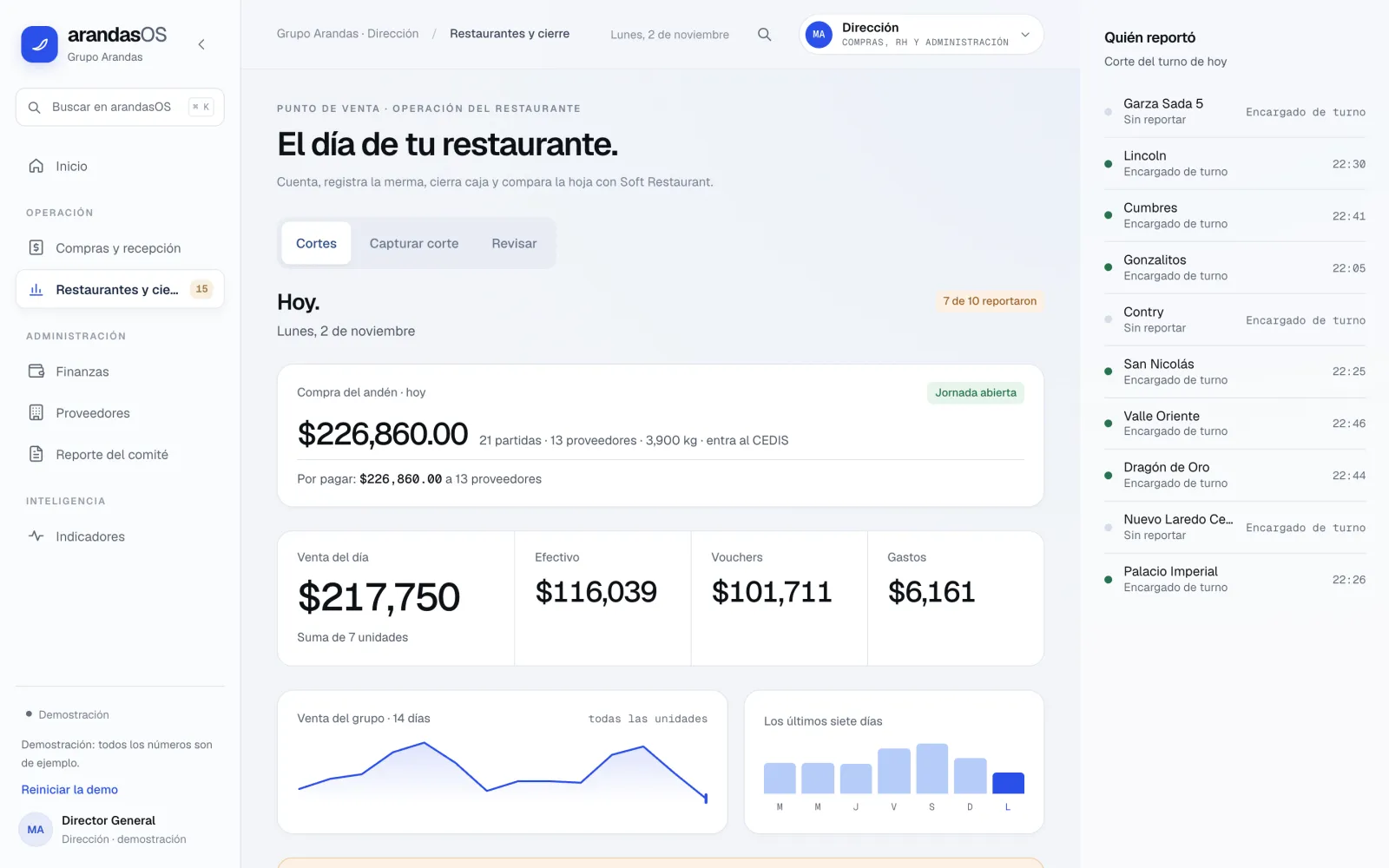
Each manager closes the shift with a photo of the cash count sheet. The system adds up sales, cash, card slips and expenses per location and shows who reported and who is missing.
The count is matched against Soft Restaurant, the restaurants’ point of sale, so mismatches show up before anyone has to go looking for them.
- Shift close with a photo of the cash count sheet
- Match against Soft Restaurant
- «Who reported» per location
- Mismatch review
04
From the warehouse to the board
What comes into the warehouse is reweighed, sent out with delivery notes and reflected in the daily inventory, with shrinkage and stock cards. Recipes are costed at two levels, warehouse and dish, with margin and actual vs. theoretical.
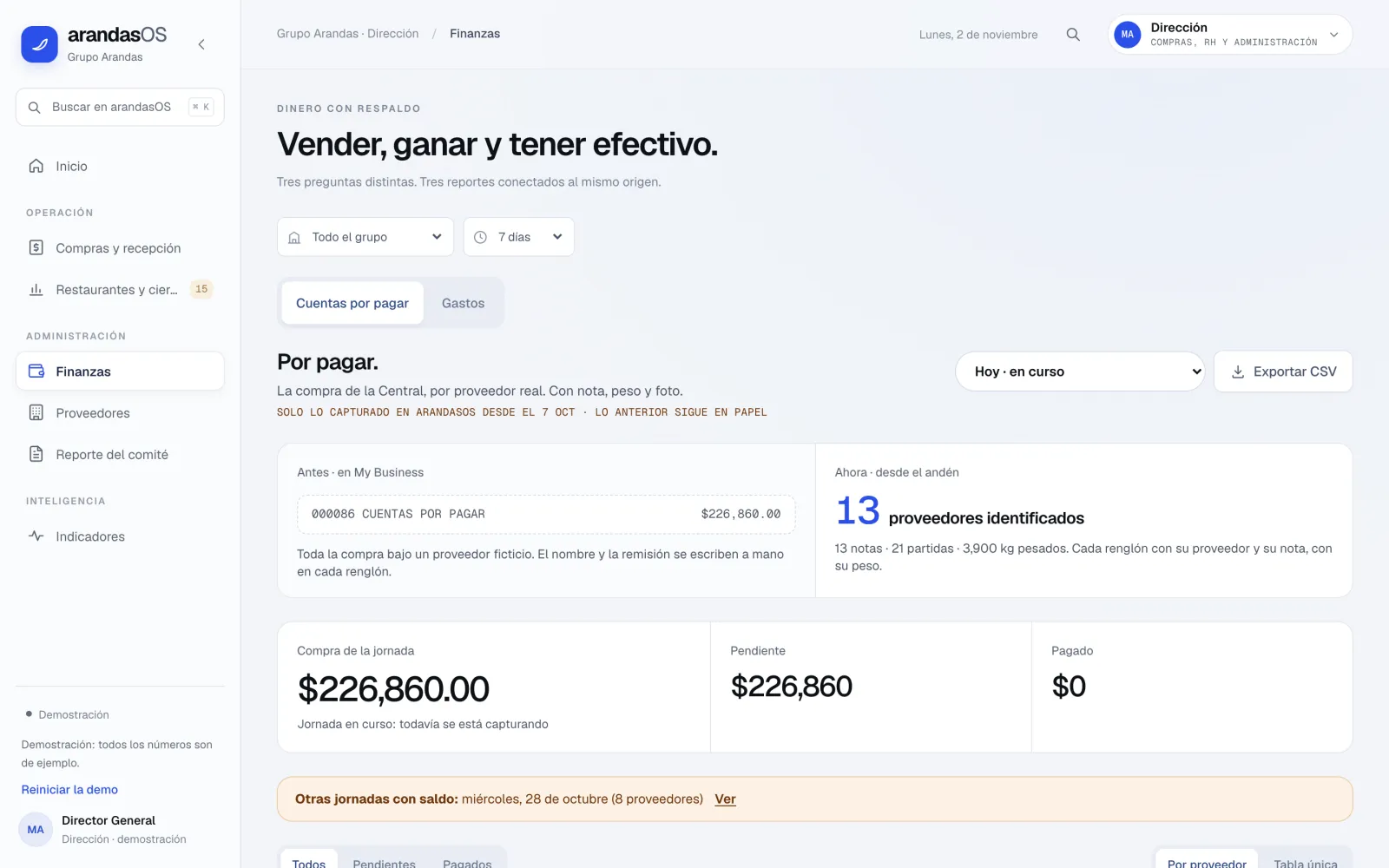
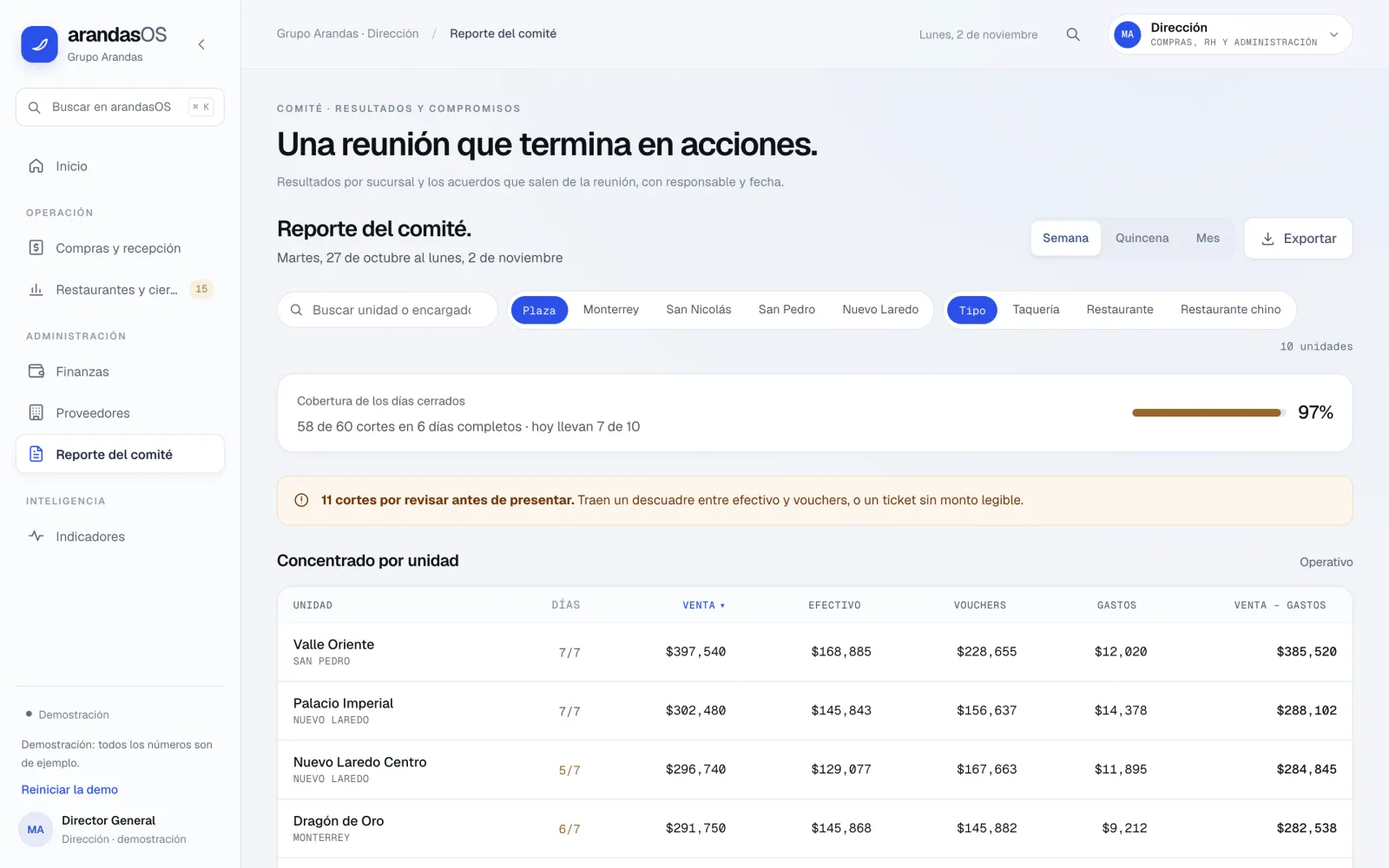
Payables are grouped by supplier and by day, and the board report brings every location together with its agreements, owners and dates.
- Receiving, reweighing, distribution and daily inventory
- Recipes costed at warehouse and dish level
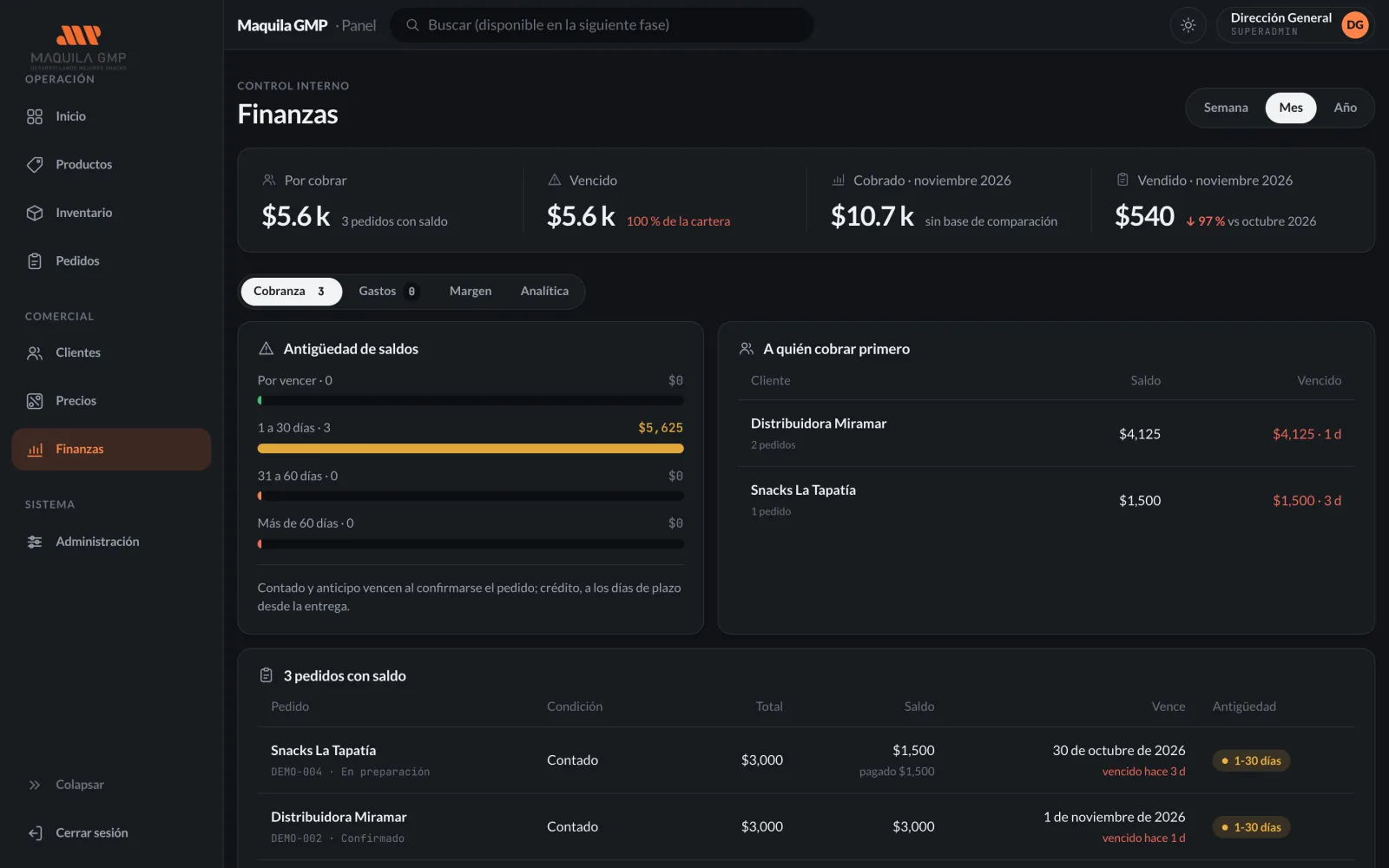
- Payables, payment prep and CSV export
- Board report with agreements and open items
- KPIs with baseline and targets
05
Fine-grained permissions, audit log and Claude connected
Permissions are edited on screen in a role × module × action matrix, and that matrix generates the database rules. Sensitive writes go through the server and are logged.
We connected the system to Claude through an MCP connector: every tool the assistant sees is limited by the permissions of the user asking. Behind it are about 1,300 automated tests that keep things from breaking as it grows.
- React
- TypeScript
- Firebase
- Cloud Functions
- BigQuery
- Offline PWA
- Claude MCP
- Soft Restaurant
More screens